
The alabaster processing journey—from extraction at the quarry to its use on the jobsite—requires a rigorous traceability and quality-control system at every stage.
While traceability makes it possible to track the material’s path, ensuring its origin and authenticity, quality control verifies that it meets the standards required for its final use. In this way, the durability, reliability, and overall quality of alabaster used in architectural projects are ensured.
At Arastone, experts in the extraction and supply of alabaster for projects, we’d like to explain what traceability and quality control mean when applied to the treatment of a natural stone such as alabaster. Keep reading so you don’t miss a thing!
Why does alabaster traceability matter in a project?
First, traceability is defined as the ability to identify and track a material’s journey from its origin to its final destination. In the case of alabaster, this practice is essential to guarantee the quality and authenticity of each block or slab used in a project.
Thus, traceability makes it possible to know the exact origin of the alabaster—from the quarry where it was extracted, through the different processing stages, to its final application on the jobsite.
This ensures the material meets the required technical and aesthetic standards and also helps detect potential defects. In addition, traceability provides transparency and trust between suppliers, manufacturers, and clients, and helps comply with environmental regulations, promoting responsible and sustainable use of alabaster in architectural projects.
Selecting and grading boulders at the quarry
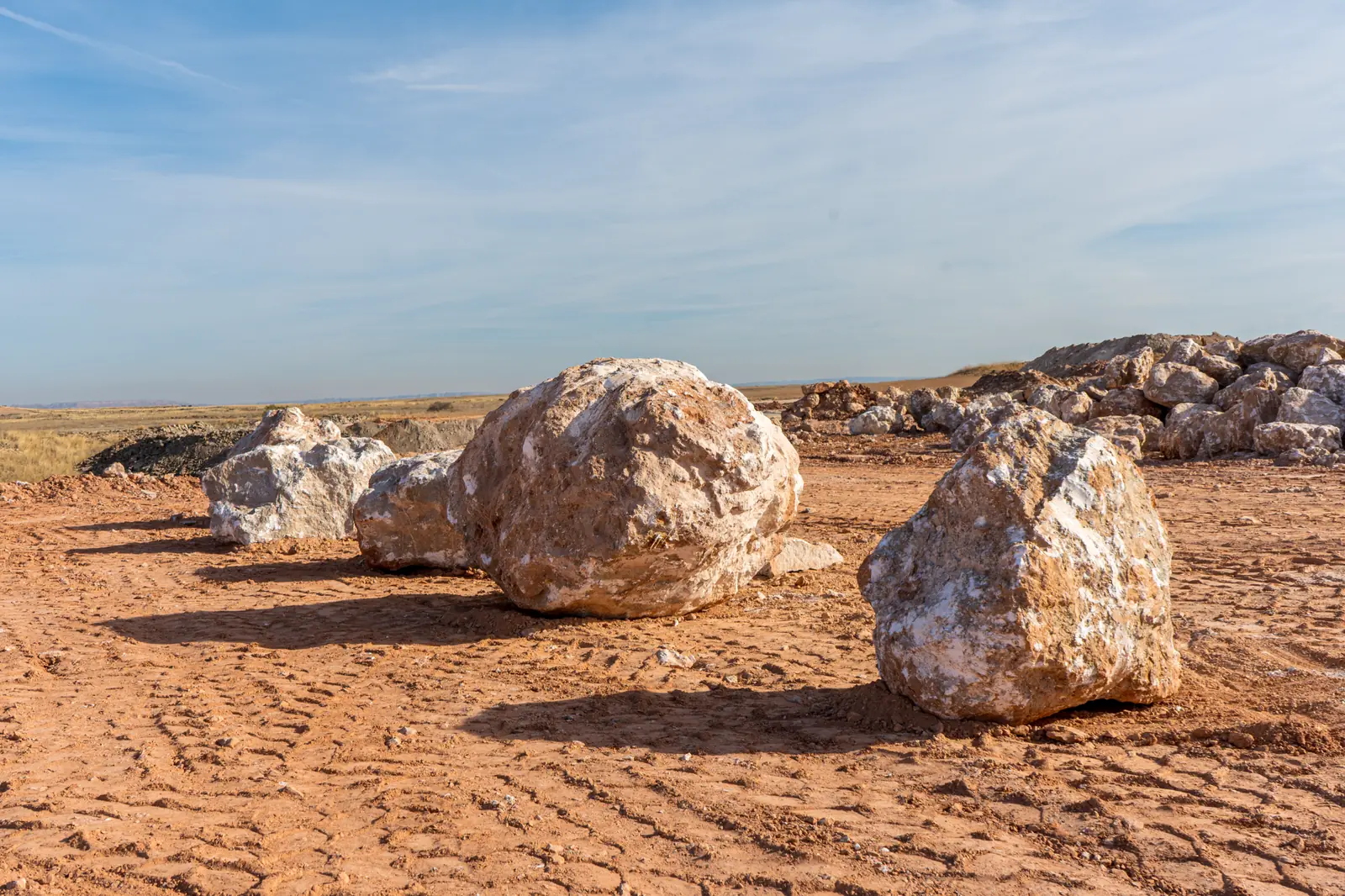
After alabaster is extracted, it’s time to select and grade the boulders/blocks at the quarry.
During the selection and grading process, aspects such as size, uniformity, color, and the removal of impurities that may coat the stone are assessed. These criteria make it possible to separate stones according to their suitability for different uses and also facilitate production planning.
Careful selection in alabaster quarries minimizes the risk of breakage or later defects and helps optimize material yield. In addition, this initial grading is essential to maintain traceability, since each block is identified and recorded, enabling precise tracking throughout the entire production chain.
How are blocks chosen based on the type of project?
Performing a careful inspection of alabaster stones to classify them according to the type of project is important to ensure the material meets both technical and aesthetic requirements. Not all stones are suitable for every use, as they vary in color, texture, hardness, and the presence of veining or imperfections.
For example, for sculpture projects or decorative elements, blocks are selected that make detailed work easier. By contrast, for alabaster panels or cladding, blocks are chosen that allow precise, continuous cuts.
This ensures each block adds value to the project, minimizing waste and ensuring an optimal finish.
Processing alabaster: from block to custom slabs and panels
Next comes the cutting and processing stage, in which blocks are cut into slabs or panels with dimensions and thickness tailored to the needs of each project.
This process requires specialized machinery that enables precise cuts without damaging the material’s structure—something that is essential to preserve its integrity and aesthetics. In addition, during processing, an initial polish or surface treatment may be applied to enhance appearance and make subsequent handling easier.
Quality control
Finally, it’s worth noting that alabaster quality control is a fundamental part of the processing workflow, ensuring the material complies with technical standards and has an optimal appearance.
For this reason, supervision takes place at every stage, from the initial selection at the quarry to the final inspection of the finished pieces. The most common checks include:
- Dimensional checks: ensure pieces meet the specified measurements, guaranteeing a perfect fit on the jobsite.
- Visual inspection: to detect potential impurities, cracks, color variations, or imperfections that could affect the appearance or integrity of the material.
A rigorous quality-control process throughout ensures alabaster delivers the quality, beauty, and durability expected in every project—quality control like the one we carry out at Arastone, because we prioritize alabaster quality from the quarry to the jobsite.